Thursday, November 12, 2009

Rick Salmon appointed President of Selection Jury for 2009 European Venture Contest

(Oslo, Nov. 12, 2009)

Europe Unlimited has appointed Rick Salmon as President of the Selection Jury for 2009 European Venture Contest Finals which will be held on December 14th and 15th, 2009 in Barcelona. The Jury will consist of 30 distinguished members representing the Venture Capital community in Europe. The mission of this annual venture contest is to find, evaluate and award world-class innovative companies with the potential to dramatically impact their industry and contribute to increasing European competitiveness and growth. This year over 700 startup companies have competed in the contest this year and the top 25 have been chosen to go to the finals in Barcelona.

Jury members will select a winner in each of the 3 categories of cleantech, life sciences, and ICT. From the top 3 companies, 1 overall winner will be selected and awarded a cash prize of EU 90,000. The companies will be evaluated on the basis of 7 factors (including business potential, team experience, investment potential, competitive position, presentation, etc.).

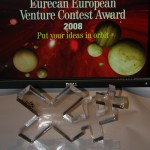
Rick Salmon competed in the 2008 European Venture Contest as CEO of RPR Technologies AS (Norway) and was selected as winner of the Cleantech category. This year, he has been asked to be the President of the Jury in order to represent and promote the entrepreneur viewpoint and to acknowledge his work with empowering European entrepreneurs.

If you are an entrepreneur who plans on raising capital or expanding your network in 2010, register now for the 2010 Eurecan European Venture Contest. For more information about Europe Unlimited, see: http://www.e-unlimited.com

Monday, November 9, 2009

Worshiping Genius

“Italy worships Genius, but has not yet figured out how to create a culture of entrepreneurship”.
This was an interesting statement made by the CEO of the Italian Angels for Growth, Lorenzo Fanchini at last week’s semi-final of the European Venture Contest (EEVC) held in Turin. Italy is a country filled with brilliant scientists and engineers. There is a huge supply of new technology, brilliant engineering and mechanical precision but unfortunately a shortage of businessmen – those boring guys in business suits that focus on cash flow instead of electron flow. Don’t get me wrong. There are good businessmen in Italy, but as an outsider, I am struck by the inequality in the number of engineers.

At the event I listened to 12 startup entrepreneurs pitch their companies to a panel of judges representing venture companies. Most of the entrepreneurs were heavy-duty techies but lightweight money-guys. Why is it that technology is so sexy while a moderate but healthy cash-flow draws only yawns? I watched one biotech company presentation where the entrepreneur race through 26 disorganized slides in just 8 minutes. 25 were about technology and only 1 was about business. It stayed on the screen exactly 1.8 seconds because it painted such a dismal picture. These were scientists that live off government funding, not businessmen who produce quality customer-driven products in return for a solid profits. There was no business plan, only a lot of fancy technology. There was a second company that presented a solid business model based on already-developed products that will reach breakeven quickly and continue to generate new patents and also a healthy cash-flow. The first company got an award. The second company was sent home and told to find bigger and more sexy markets. Should investors worship genius or invest in good, solid performance companies?

At the University of Colorado School of Business I studied with two other buddies. Two of us left school and went to work in the computer industry. We have spent our careers chasing hot and fancy new technologies. The third buddy started selling coffee machines to business customers. We mocked him. We laughed and felt so superior as we worshiped our marvelous technology advances. Today, he is the one that is outrageously wealthy while we others are perhaps still chasing.

If we worship “Genius” but fail to provide seed funding for sound businessmen, then we will never create a sustainable culture of enturepreneurship.

If you are an European entrepreneur and want more information, help and assistance, suscribe to this blog. I write frequent articles about the startup companies and events that I participate in.

Want to turn-around your business and achieve huge results in record time? Contact me to discuss Executive Coaching, Group Facilitation and Management for Hire services. You can learn more at www.ricksalmon.com and at www.xelerator.com.

Rick Salmon is an energetic entrepreneur who believes that this beautiful world that we have created needs our help. Subscribe to this newsletter to receive frequent updates and tips.

For more information about the EEVC European Venture Contest,
see: http://www.e-unlimited.com

For more information about the Italian Angels for Growth,
see: http://www.italianangels.net

Thursday, November 5, 2009

If you are so smart, why are you not rich?

“If you are so smart, why are you not rich?”

I saw this written on a T-shirt yesterday at a gathering of entrepreneurs. It was a blatant challenge and it made me stop and think. In looking back on my 20 years as an entrepreneur, have I failed if I am not rich? Is that really what has driven me all these years? No, not really.

I immediately wanted to change the T-Shirt to read: If you are so smart, why haven’t you changed more lives? Why haven’t you helped more people… Created more jobs… Saved more children… Made a difference in the world?

According to a recent article in the International Herald Tribune, a rising new trend is the emergence of “Social Entrepreneurship”. Young entrepreneurs are realizing that just seeking wealth will not really make them happy. Finding meaning in what you do on your route to making money is ultimately much more rewarding and fulfilling.

I may not have yet acquired the riches of a sultan in all my years with startup , but I have been able to create companies and I have had the freedom, the drive and the turbo-motivation that comes from giving birth to ideas that grow to be corporations.

If your highest personal value is the creation of wealth, then remember Howard Hughes who died alone, isolated and lonely after building one of the greatest fortunes of the last century. Go ahead and make money, but also create a better world in the process. If you are so smart, then you will get this.

Want to turn-around your business and achieve huge results in record time? Contact me to discuss Executive Coaching, Group Facilitation and Management for Hire services. You can learn more at www.ricksalmon.com and at www.xelerator.com.

Rick Salmon is an energetic entrepreneur who believes that this beautiful world that we have created needs our help. Subscribe to this newsletter to receive frequent updates and tips.

Monday, November 2, 2009

A Crisis is a Terrible thing to Waste (Part 2) – Smoke Signals

When I was a boy I loved to watch “Cowboy and Indian” programs on television. The plots were always the same. They usually started with a group of settlers – who were traveling in their covered wagons towards some dream of a better life in a faraway place. Then would come some sort of a crisis. The crisis was usually the Indians. First the Indians would signal their attack by sending up smoke signals that would be visible from far away (because the Indians didn’t have mobile phones). The smart cowboys would see the signals and take cover, but most cowboys would ignore the signals and keep right on moving along until the Indians swooped down from the hills and attacked the wagon train.

When a business ends up in a crisis, it is usually because they fail to pay attention to the smoke signals. Most of the time the signals are there on the horizon, clear and easy to see, yet they choose to ignore them. And then when the Indians swoop down upon them, they are just as surprised each time.

The first stage of any crisis is the realization that a crisis has emerged. Just like with the Indians, it usually comes as a shock but still takes a while before the reality sinks in.

So what can an entrepreneur do to see the signals? What are some of the practical things a startup business can do in order to avoid ending up in a deep crisis?

  1. Take frequent Reality Checks. Ask yourself tough questions about your business and give yourself honest answers. It is better to face the facts and get prepared than to avoid them and just hope that things will improve.
  2. Guard your Optimism, but Be Prepared. The Arabs have a saying “Trust in Allah, but tie up your camels”. Optimism for an entrepreneur is essential, but it can sometimes lead to difficult situations. I have observed this many, many times with startup companies.
  3. Practice sound Financial Planning. I have seen over 100 entrepreneur venture pitches over the past 6 months and very few had done sound financial forecasts and cost analysis. There is a general lack of planning with startups and this is perhaps one of the biggest reasons so many struggle to get early-stage funding.
  4. Hire a Board of Directors. Most startups have a Board that consists of the 2 young founders and Uncle Bob. You can avoid crisis if you have a good board of advisers who are also minority shareholders and interested in helping your company prosper and grow. Give away shares if you need to, but get the best possible people you can find and ask them to be tough on you. If this is the only thing you do from all the suggestions in this blog entry, then you will still have made a big change.
  5. Stay close to your customers. Even if you don’t have customers yet, stay close to your target market. Talk with them. Ask them questions. Get their feedback. Make sure you are providing products and services that they don’t just need, but that they really want. I may need a new car for the purpose of basic transportation, but I really want that Audi TT sports car.
  6. Think Long-term but Act Short-term. What I mean here is that you must keep your focus on the long-term goals and aspirations you have for your business, but you must take short-term action that provides the cash flow and resources to survive and ultimately grow. Many technology companies spend a long time developing their products, but run out of money either before they are completed or before they have been able to sell products and prove that they can generate revenues. It is much easier to get an early-stage investor to put money into your business if you can demonstrate sales revenues. Even if revenues come from services and not product sales, this does not matter. Think long-term, but act in the short-term to bring in revenue and lessen the possibility of a financial crisis for your business.

If you see smoke signals on the horizon, take action immediately. The sooner you do, the less the consequences and the pain of a crisis. If the situation has already swooped down upon you like a tribe of angry Indians, then in the next blog entry I will discuss how to circle your wagons and stage a defense. In the meantime, remember that becoming a successful entrepreneur is about the learning to master the game… and A Crisis is a Terrible Thing to Waste.

Want to turn-around your business and achieve huge results in record time? Contact me to discuss Executive Coaching, Group Facilitation and Management for Hire services. You can learn more at www.ricksalmon.com and at www.xelerator.com.

Rick Salmon is an energetic entrepreneur who believes that this beautiful world that we have created needs our help. Subscribe to this blog to receive frequent updates.

Tuesday, October 27, 2009

Meetings With Remarkable Men


I saw a strange French movie in 1979 that made a big impact on me. It was called Meetings with Remarkable Men and told the story of G.Gurdjieff, a philosopher who traveled through Central Asia in order to discover spirituality through dance, music, near-encounters with death and by meeting remarkable people along the way.

Over the last 24 hours I have had 2 encounters with remarkable men. Both related to my last blog entry regarding how to handle a crisis. I learned something new.

The first encounter occurred yesterday with a friend who is fighting to recover from a life-threatening accident that left his body and brain damaged and has forced him to have to re-evaluate his entire life. His courage and his determination inspire me and remind me to stay focused on what is most important here in life. His re-evaluation of his career has also reminded me of how important these types of questions really are. When we are forced, due to a crisis, to re-examine things at a fundamental level, then we sometimes get a chance to start over and re-create our lives and our businesses as we would ideally have them rather than after a pattern that merely came about over many years. Crisis is a valuable opportunity and an important process if you want to grow your business or accelerate your own personal development.

The second encounter was in a meeting with a business associate. We met over coffee this morning and discussed plans to collaborate on some workshops and marketing projects. Two things were remarkable. First, his energy level was contagious to the point that I left our meeting charged with a sense of urgency and a new determination to attack the problems that this crisis has presented. Second, as we were parting he said “Thank you for being you”. I realized that in light of the current crisis, my true self - my true colors are being freed and are shining through. Adversity brings out the best in us if only we let go and don’t fight it.

A crisis is a terrible thing to waste.

Rick Salmon is an energetic entrepreneur who believes that this beautiful world that we have created needs our help. Subscribe to this blog to receive frequent updates and to join in the work. Learn more at www.ricksalmon.com

Sunday, October 25, 2009

A Crisis is a Terrible Thing to Waste (Part 1)

My own company is in a crisis right now… a real crisis with tough decisions to make, sleepless nights to endure and an impending sense of doom that is like a nasty hangover. A bit of bad luck, bad timing, some strategic mistakes and a global financial crisis have all combined into a witch’s brew of a startup company cash-flow mess. The squeeze we have gotten ourselves into is not all that uncommon for most small business leaders and entrepreneurs. A friend said “just get used to it… the bigger your business, the higher the stakes and the smaller your odds of survival”. Thanks for the depressing thought.

Now before you all start to worry that I am about to throw in the towel, shipwreck the business and go take a job flipping hamburgers at McDonalds, just relax for a moment. I am attacking this situation head-on because...

A Crisis is a Terrible Thing to Waste.

Saturday, October 17, 2009

Throw away 1000 years of history


When I arrived in Trento, Italy on Thursday the first thing I noticed were the city walls. Since the medieval times they have kept out invaders from the north and conquerors from the south. When you are reminded of your ancient past each day, perhaps it makes it harder to understand that THE PAST IS NOT THE FUTURE.

I was a speaker at a venture event in Trento this week that was sponsored by the local government and businesses. This region is making a fantastic effort in their attempt to break from the traditional thinking of old Italy and Europe and to foster innovation, creativity and entrepreneurship. While perhaps this may sound novel, the reality of changing peoples’ beliefs and even values is daunting. In almost every single meeting I had with entrepreneurs it only took about 3 to 4 minutes before they started by telling me how difficult it is to succeed with a startup in Italy. It was almost as if they felt it was their task to convince me that this was impossible!

Thursday, October 15, 2009

Entrepreneurs are Losers

A few weeks ago I was standing in line at the store behind two boys. They were probably 13, maybe 14 years old and these guys were really cool. They wore low-rider pants that constantly tried to slide down to their knees, big T-shirts advertising their favorite vampire heavy metal bands. One had a skateboard under his arm while the other had a ski hat tugged down over his ears in spite of the warm day. I overheard them talking about a friend of theirs who had recently quit the skateboarding scene and moved on to something else (I think they said he quit skateboards and started chasing girls…). As they talked about him, they both stopped, looked at each other and simultaneously lifted their right hands to their foreheads. Placing their thumbs against their foreheads and extending their index finger straight up, they had both created the big “L” sign. This stands for “Loser”. Having both agreed on this point and signaled what they thought about it, they smiled to each other and went on to talk about something else.

Are Entrepreneurs Losers? Today I will be speaking at a venture event in Trento, Italy. There will be 20-30 startup entrepreneurs who will pitch their business plans to investors in the hopes of getting capital for their young businesses. To be really honest, most of them will not leave this event with any promise of funding. Many will be frustrated and go home and wonder if it would be better to go back to the university or research environments they came from and live the easy life on student loans and government grants.

Only a fool would tell you that being an entrepreneur is easy. It takes a ridiculous amount of blood, sweat and tears in order to create a successful business when you start with nothing but a great idea. If first-time virgin entrepreneurs knew what they were getting into and how much hard work is required, then most would probably never even attempt a startup. This is not a career of choice for the weak of heart.

Entrepreneurs are Losers… but only if they quit. The only real failure for any entrepreneur happens when they abandon their idea and quit. “Success” for an entrepreneur is not any specific event or goal to be achieved. Success is the process of learning how to create businesses. Becoming a “successful entrepreneur” means that you know how to do this kind of work - you know how to start with a good idea and how to persevere with it until it becomes a real company with real value for it’s owners and customers. It means that you know how to do the dance and to make it rain on your cornfield.

Don’t be a loser. Learn rather than quit. Find a way to adapt or change your business until you eventually get what you are seeking. Successful entrepreneurs are winners.

For more about the Trento venture event and other funding opportunities for entrepreneurs, contact Europe Unlimited (www.e-unlimited.com).

For more information about how I work with startup groups to help them accelerate their startup business, contact me: rs(@)ricksalmon.com

Wednesday, October 7, 2009

Pitch your Baby

Hope

I have a friend who just had his first child. He’s over the moon about this baby and OK, all his friends are happy for him too, but he sends out constant emails with photos, short video clips, frequent little stories about first baby steps. There are facebook pages and even twitter messages from time to time. This is a great example of pitch and even the most experienced entrepreneur in the world could learn a thing or two from a new parent.

This is how you should pitch your startup company… just like it was your newborn baby child. Pitch your business with enthusiasm, pride, a strong sense of purpose and a belief that this baby will someday grow into something big and fantastic!

Pitching your startup to venture capital people is a blast and also a great way to accelerate your business development. I learned early-on that getting honest and direct feedback is essential in order to help me as an entrepreneur to face reality and to keep my startups on the right path. Honest feedback may not always be pleasant to hear, but it is always valuable – either to confirm or to correct your strategy.

Seek out opportunities to pitch your business to experienced businesspeople and especially to venture capitalists. There are lots of different venues for pitching. Check out the Europe-Unlimited venture events, which are free and open to all European startups. You will be amazed what you will learn.

Want my feedback on your business pitch? Contact me today. Maybe I can help.
rs(@)xelerator.com


Rick Salmon is an energetic entrepreneur who believes that this beautiful world that we have created needs our help. Learn more at www.ricksalmon.com

Creative Commons License photo credit: Quinn Dombrowski

www.xelerator.com